Why Tech Will Be Central to Solving Global Food Security
Technology’s integration into agriculture is pivotal for addressing global food security. Precision agriculture enhances crop yields through targeted resource management. Artificial intelligence optimizes food distribution, reducing inefficiencies. Meanwhile, blockchain technology ensures transparency in supply chains, fostering trust among stakeholders. Urban food production faces unique challenges, yet innovations like vertical farming offer promising solutions. As these technologies evolve, their impact on food systems could dramatically reshape how societies address hunger and sustainability. What lies ahead?
The Role of Precision Agriculture in Maximizing Crop Yields
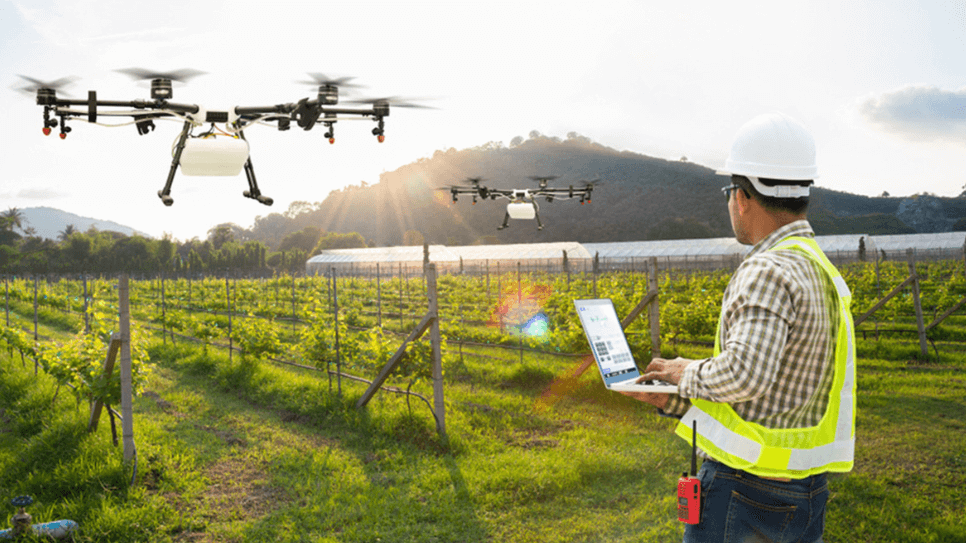
Precision agriculture has emerged as a transformative approach in the quest to maximize crop yields, with numerous studies indicating that it can enhance productivity by up to 30%.
This innovative method leverages drones usage for aerial monitoring and soil sensors for real-time data collection, enabling farmers to make informed decisions.
Consequently, it fosters sustainable practices while promoting autonomy in agricultural operations, ultimately enhancing food security.
See also: Why Technology Is the Key to Achieving Sustainability Goals
Harnessing Artificial Intelligence for Efficient Food Distribution
As global food systems become increasingly complex, leveraging artificial intelligence (AI) for efficient food distribution emerges as a critical solution to enhance food security.
Machine learning algorithms can analyze vast datasets, optimizing routing and logistics. Predictive analytics forecasts demand trends, ensuring timely deliveries and reducing waste.
Blockchain Technology: Ensuring Transparency and Traceability in Supply Chains
Efficient food distribution, enhanced by artificial intelligence, lays the groundwork for the integration of blockchain technology in supply chains.
This innovative approach ensures transparency and traceability, empowering stakeholders to verify product origins and conditions.
Smart contracts automate transactions, reducing inefficiencies and fostering trust among participants.
Vertical Farming: Sustainable Solutions for Urban Food Production
Vertical farming represents a transformative approach to urban food production, addressing the pressing challenges of food security in densely populated areas.
Utilizing hydroponic systems, this innovative method maximizes space and resource efficiency, enabling sustainable urban agriculture.
Conclusion
In a world where food scarcity looms like a shadow over civilization, technology emerges as the heroic savior, wielding the power to transform barren fields into lush landscapes of abundance. Precision agriculture, AI, and blockchain stand poised to revolutionize our food systems, ensuring that every morsel is cultivated, delivered, and consumed with unparalleled efficiency. As urban landscapes evolve into thriving vertical farms, humanity inches closer to a future where global food security is not just a dream, but an astonishing reality.