Speech Therapy for Toddlers: What It Looks Like and When to Start
Reviewed by a licensed speech-language pathologist
Quick answer: Speech therapy for toddlers is mostly play-based and parent-coached, not drills at a desk. It can start at any age, including well before age two, once an evaluation shows a child could benefit. The earlier it begins, the more it can work alongside a toddler’s natural language growth.
When a toddler is slow to talk, many parents picture a clinical room and a child being made to repeat words. Real speech therapy for toddlers looks almost nothing like that. It happens through play, songs, and everyday moments, and much of the work is teaching the adults at home how to draw out more language. Knowing what to expect makes the whole idea far less intimidating, and it helps parents decide when to act.
What is speech therapy for toddlers?
Speech therapy for toddlers is guided support delivered by a speech-language pathologist to help a young child understand and use language. For this age group, the focus is rarely on perfect pronunciation. It centers on the building blocks: making sounds, using first words, combining words, following simple directions, and using gestures and eye contact to connect. The National Institute on Deafness and Other Communication Disorders describes speech and language as related but separate skills, and a therapist may target either or both depending on what a child needs.
A key point for parents: the therapist is often working through the parent. Toddlers learn language during ordinary interactions, so coaching a caregiver to prompt and respond well matters as much as anything done in a session.
What does a session actually look like?
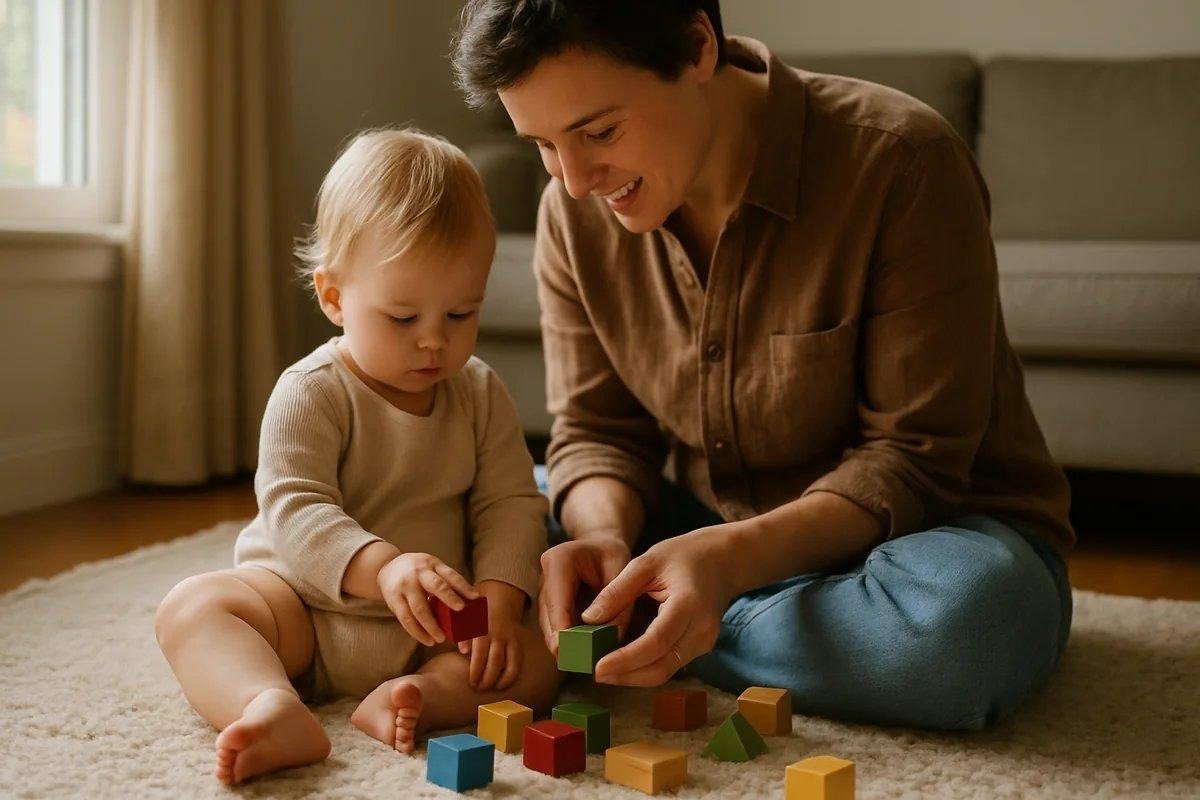
Most toddler sessions look like playtime with a purpose. A therapist might blow bubbles and pause so the child asks for “more,” read a board book and leave off the last word of a familiar line, or set up a toy garage so the child has reasons to name cars and actions. The child is following their own interest while the therapist quietly shapes each moment toward a language goal.
Sessions may take place at a clinic, at home, or over video. Home and telehealth visits have an advantage for this age: the child is comfortable, the toys are their own, and the parent is right there to practice the techniques in real time. A good therapist explains what they are doing and why, so the family can repeat it after the visit ends.
When should a toddler start speech therapy?
There is no minimum age, and earlier is generally easier than later. Children under three can access early intervention, and some begin support before they turn two. The Centers for Disease Control and Prevention publishes developmental milestones by age and encourages families to act early when something seems off, rather than waiting for a child to grow out of it.
Certain patterns are worth attention: few or no words by around 18 months, no two-word phrases by around 24 months, trouble understanding simple requests, or losing words the child used to say. The American Academy of Pediatrics notes that a toddler who understands far more than they can say, and who communicates with gestures, may look different from one who struggles with both. Either way, a concern is reason enough for an evaluation.
Is a late talker the same as needing therapy?
Not always. Some toddlers are simply late talkers who catch up on their own, a pattern the American Speech-Language-Hearing Association describes as late language emergence. The difficulty is that there is no reliable way to predict in advance which late talkers will catch up and which will not. That uncertainty is precisely why an evaluation is useful. It sorts a passing lag from a delay that would benefit from support, and it costs a family little to find out.
An evaluation by a speech-language pathologist usually blends a short standardized measure, observation of the child at play, and detailed questions for the parent. From there, the team decides whether therapy makes sense and, if so, what to aim for first.
How can parents support progress at home?
Home is where most language learning happens, so what parents do between sessions carries real weight. A few habits help at almost any stage: narrate daily routines out loud, pause after asking a question to give the child time to respond, get down to eye level, and expand on whatever the child offers. If a toddler says “dog,” a parent might answer “big dog” or “the dog is running.” Reading together and singing repetitive songs give words a predictable, playful frame.
Because a weekly session is only a small slice of a child’s week, some families add short, daily practice at home. Voice-first, play-based tools such as littlewords.ai give a toddler low-pressure speaking practice through games, which can reinforce the goals a therapist is already working on. This kind of home practice works best as a supplement to therapy rather than a replacement for it, and it should stay light and fun rather than becoming a chore.
What happens if a toddler starts and then catches up?
Progress is the goal, and plans are meant to change. As a toddler meets targets, the therapist adjusts the goals or reduces the frequency, and services can end when a child no longer needs them. Starting therapy is not a permanent commitment or a label a child carries forever. For many toddlers, it is a short, focused boost during a window when language is developing fast anyway.
Key takeaways
- Speech therapy for toddlers is mostly play-based and parent-coached, not formal drills.
- There is no minimum age, and early support fits well with a toddler’s rapid language growth.
- Watch for signs like few words by 18 months or no two-word phrases by 24 months, and seek an evaluation if concerned.
- Some late talkers catch up on their own, but there is no reliable way to predict who will.
- Daily talking practice at home reinforces therapy and can be built into ordinary routines.
Frequently asked questions
At what age can a toddler start speech therapy?
There is no minimum age. Children under three can receive early intervention, and some start well before their second birthday, once an evaluation confirms a need.
What does a toddler speech therapy session look like?
Mostly like play. A therapist uses toys, books, and games to prompt sounds and words, and often coaches the parent to use the same techniques at home.
How long does speech therapy take to work?
It varies by child and goal. Some toddlers show progress within weeks, others need many months, and consistent practice between sessions helps.
Should I wait to see if my toddler catches up?
Waiting is common but not required. Early support carries little downside, so many families choose an evaluation rather than a wait-and-see approach.
Is toddler speech therapy expensive?
Costs vary. Early intervention for children under three is often free or low cost, and some private therapy is covered by insurance depending on the plan and state.
Sources
- American Speech-Language-Hearing Association: Late Language Emergence (asha.org)
- American Academy of Pediatrics (HealthyChildren.org): Toddler Development and Language (healthychildren.org)
- Centers for Disease Control and Prevention: Developmental Milestones (cdc.gov)
- National Institute on Deafness and Other Communication Disorders: Speech and Language (nidcd.nih.gov)
- American Speech-Language-Hearing Association: Speech and Language Developmental Milestones (asha.org)